Therapeutic areas
As one of the world’s most critical medical challenges, cancer is one of our primary focus areas
Cancer remains the second-leading cause of death in the industrialized world, and incidence rates are growing. The cause of cancer is manyfold, and genetics, environment and lifestyle factors play a role in the evolution of cancer in different parts of the world. Even though there have been important breakthroughs in recent decades, there is still a high unmet need in the treatment of cancer.
Cancer immunotherapy has quickly become one of the key treatment opportunities against several cancer types. The therapies available today, checkpoint inhibitors being at the forefront, benefit only 20-30% of cancer patients with durable responses, and some cancer types do not respond at all. The need for additional and novel approaches addressing the untapped potential of activating the immune system, such as Nykode Therapeutics’ cancer vaccines, is still valid. Combining insights into genetic alterations and environmental exposures and activation of the immune system will continue to be an important part of cancer therapy evolution for years to come. Individualized cancer therapy, with treatment approaches tailored to each patient, is expected to be increasingly important in the fight against cancer. Combining individualized approaches with activation of the immune system is an attractive and increasingly emerging approach. Therapeutic cancer vaccines, with their ability to specifically activate the immune system, in particular CD8 killer T cells, and target specific cancer antigens, is one such approach.
HPV-driven cancers
One of the emerging challenges within oncology is virus-induced cancer types, with Human Papillomavirus (HPV) being one of the most prominent. HPV is the cause of 630,000 cancer cases annually. There are several types of high-risk HPV-causing cancers, with HPV16 being the most common. HPV-induced cervical cancer is the fourth-most common cancer form among women worldwide. HPV-induced oropharyngeal cancer, a type of head and neck (H&N) cancer, is rapidly growing among both women and men in the Western world, particularly in Northern Europe and North America. Even though preventive vaccines are available and cervical cancer screening detects many cervical cancers at an early stage, we know that HPV-induced cancers take decades to develop. Consequently, there will still be a need for novel treatment approaches against HPV-caused cancers for many years to come.
HPV-driven cancers appear in younger patients, and the biology of the tumors differs from what is traditionally seen in many cancer forms. Immune checkpoint inhibitors are an important part of the clinical development landscape in HPV-driven tumors, but despite the advances seen in the treatment of cervical cancer and other HPV-driven cancers, there is still a need to increase the number of responding patients.
Using a therapeutic cancer vaccine targeted specifically towards the HPV16 infected cells in the tumors, such as Nykode’s cancer vaccine VB10.16, represents a novel immunotherapeutic treatment option. By combining a therapeutic cancer vaccine with the checkpoint inhibitors and/or other general immune therapies, the tumors can be attacked by the cancer-specific T cells from several angles with the aim of improving patient outcomes.
Individualized cancer therapy
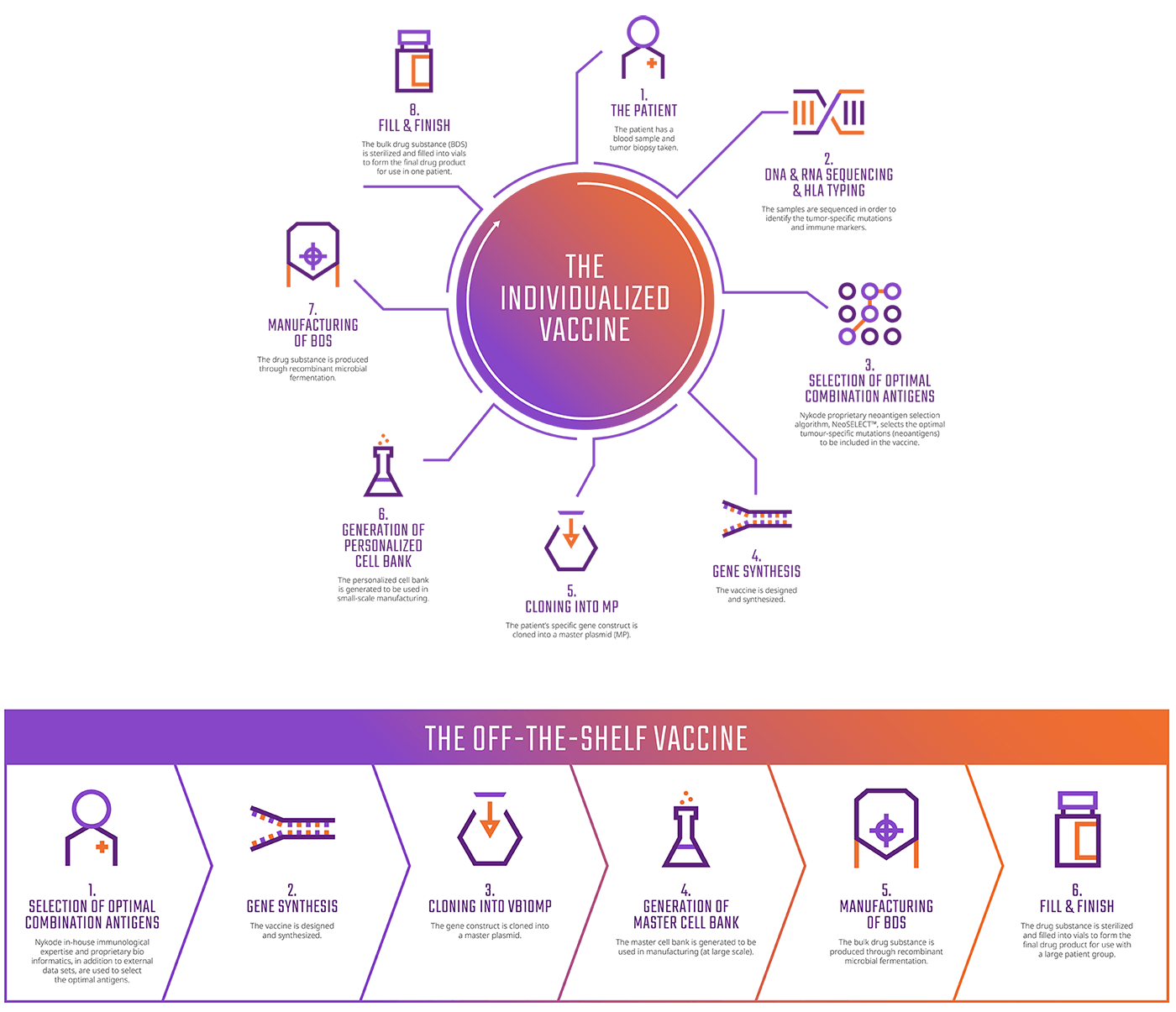
Every patient’s tumor is unique, and to effectively address this challenge, the principle of individualized treatments is emerging quickly as an important part of future cancer therapy options. By focusing on individual characteristics and mutational alterations in each patient’s tumor, therapies can be uniquely tailored and customized.
Evaluating the alterations in tumor cells enables the development of an individualized therapeutic cancer vaccine, targeting a wide array of immunogenic mutations unique to each patient. Building on this foundation and harnessing the potential of each patient’s immune system to recognize and kill their specific tumor, this approach can be applied to a broad range of tumor types. It can be used either alone or in combination with other cancer immunotherapies, such as checkpoint inhibitors.
PIONEERING THE BATTLE AGAINST AUTOIMMUNE DISEASES THROUGH INNOVATIVE THERAPEUTIC STRATEGIES
The complex world of autoimmune diseases
Autoimmune diseases, where the immune system mistakenly attacks the body’s own cells, present a significant and growing health challenge. These conditions, ranging from rheumatoid arthritis to multiple sclerosis, affect millions worldwide, manifesting in various forms and intensities. The complexity of these diseases lies in their diverse etiologies, involving genetic, environmental, and lifestyle factors. Despite advancements in understanding the immune system, there remains a substantial unmet need for effective, targeted treatments for many autoimmune conditions. Current therapies rely primarily on broadly immunosuppressive agents that unavoidably enhance the risk of adverse effects comprising infection and cancer. The goal of future autoimmune disease therapy is to restore tolerance to the self-antigen(s) that causes the pathology by targeting autoreactive T cells while preserving immune competence to prevent infections and malignancies.
Nykode’s approach to autoimmune diseases
Our approach to treating autoimmune diseases is grounded in a thorough comprehension of the immune system, augmented by the capabilities of our technology platform to precisely target antigens to antigen-presenting cells. Specifically, in the context of autoimmune disorders, we focus on directing these antigens to specialized antigen-presenting cells that are adept at eliciting antigen-specific immune suppressive T cell responses. This strategy is opposite of the pro-inflammatory responses triggered by conventional vaccines. As a result, vaccines developed for autoimmune conditions are often referred to as “inverse” vaccines. Additionally, our versatile DNA platform allows for the incorporation of DNA-encoded immune suppressive cytokines. This integration further conditions the antigen-presenting cells, thereby enhancing the immune suppressive response and offering a more targeted therapeutic approach.